
The Science
Inspired by the same technology that powers everyday essentials like camera lenses, vision optics, and smartphone screens, Spectra Indigo Glass introduces a new era of packaging preservation. Just as nanofilters in cameras enhance color accuracy and anti-reflective coatings in eyeglasses reduce glare, our breakthrough in Nanoreflective Technology is engineered to protect what is inside the jar by controlling how light interacts with it.
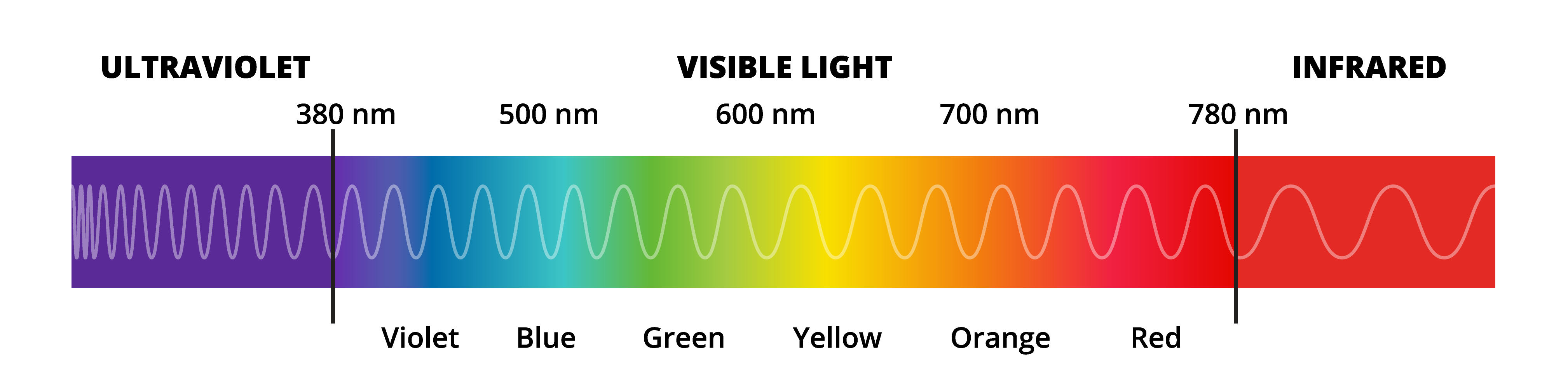
Drawing from research on how specific wavelengths of light contribute to product degradation, our proprietary indigo glass manufacturing process is precisely engineered to harness the beneficial effects of ultraviolet-A (UVA) and infrared (IR) light, while selectively filtering out the damaging wavelengths within the visible light spectrum.
Independent studies show it outperforms traditional clear, opaque, and colored containers, including violet glass, in preservation performance. Extending shelf life from origin to aisle to everyday life.
What is Nanoreflective Spectrum Technology?
Nanoreflective Technology uses materials with nanostructures or nanoparticles to manipulate light at the microscopic level. After four years of research, this technology led to the development of our proprietary manufacturing process. Within this process, nanoscale structural patterns are embedded and layered throughout the indigo glass surface, enabling controlled modulation of how light is reflected and absorbed within the glass jar. Incorporating these nanostructure patterns between the layers of our glass creates a protective barrier against unwanted wavelengths while allowing selective transmission of favorable wavelengths. The result is a refined approach to packaging that delivers maximum protection and performance for perishables. Spectra indigo glass jars naturally extend the shelf life of your products by up to 20% more than other containers tested.
How does it work?
All natural products undergo gradual degradation over time, and exposure to visible light can accelerate this process. Although the full light spectrum contributes to eventual deterioration, research indicates that targeted exposure to specific wavelengths within the ultraviolet (UV) and infrared (IR) ranges can help extend shelf life. These rays have shown an ability to stabilize water molecules and reduce microbial activity, including bacteria and other microorganisms, thereby slowing spoilage and helping preserve product integrity for longer periods.
Nanoreflective Technology has led us to a manufacturing method scientifically validated to protect and support the vitality of your products. The glass is engineered not only to selectively absorb beneficial levels of ultraviolet-A (UVA) and infrared (IR) wavelengths, but also to selectively deflect up to 99.7% of harmful visible light rays. The result is a highly advanced package that maximizes the preservation potential of selective light exposure. With substantial evidence showing that sunlight can be harnessed to improve product preservation, Spectra has invested extensive effort to calibrate the precise amounts of UVA and IR light that can pass through glass. We are proud to introduce this scientific breakthrough as an attractive package that can significantly protect your product from its typical degradation timeline.
Benefits of controlled UV-A exposure
Inspired by major breakthroughs in nanoreflective technology, Spectra’s proprietary layered manufacturing process enables our jars to fully leverage the benefits of the indigo color spectrum. The outcome is packaging that helps create an optimal light environment by absorbing beneficial UVA rays while blocking up to 99.7% of visible light. While we understand that excessive UVA exposure can be harmful under certain conditions, we also recognize that moderate exposure can actually help maintain the current condition of organic materials.
Upon revisiting the 2020 study “Ultraviolet A Light Effectively Reduces Bacteria and Viruses Including Coronavirus,” published in PLOS One and archived by the National Library of Medicine, we were reminded of compelling scientific evidence showing that UVA light (wavelength range 325–400nm) produces a significant reduction in microbial activity. The study confirms that UVA exposure leads to marked decreases in both bacterial cell counts and colony size across multiple time points (The PLOS ONE Staff, 2020, Table 2, S2 Table, Fig1).
By enabling controlled exposure to beneficial UVA wavelengths while also shielding contents from nearly all visible light, our packaging not only slows physical and chemical degradation but may also help reduce microbial activity. This dual-action approach reflects our commitment to advancing packaging performance through scientifically supported, spectrum-conscious design.
Benefits of controlled Infrared exposure
Infrared (IR) light offers unique advantages for preserving and enhancing food and other perishable products, particularly through its thermal properties and its interaction with biological compounds. According to A Comprehensive Review on Infrared Heating Applications in Food Processing, published in PubMed Central and archived by the National Library of Medicine, IR exposure has been shown to support the preservation of vitamins and significantly reduce the risk of flavor degradation during heating processes (Introduction, para. 2). These findings highlight IR light’s ability to gently yet effectively support microbial control and moisture balance without compromising the nutritional or sensory qualities of a product.
Building on this research, we have meticulously engineered our indigo glass layering process to optimize the selective transmission of infrared light, specifically in the wavelength range around 940nm. This targeted design enables our packaging to harness the beneficial effects of IR exposure, providing a passive way to extend freshness and maintain product quality. By allowing a greater percentage of this beneficial light spectrum to penetrate the container, our technology not only supports the preservation of key nutrients and flavors, but also contributes to a more stable and prolonged shelf life, without the need for artificial additives or interventions.